
Published
•
Updated
Want to edit Gravity Forms entries 340% faster?
Do you edit a lot of Gravity Forms entries? You need our new plugin: Inline Edit. Data entry is a pain. It was one of my first jobs, and I’ll never forget it. If you’ve ever spent hours updating a single value for hundreds or thousands of records in a database, you know the feeling: your…

Do you edit a lot of Gravity Forms entries? You need our new plugin: Inline Edit.
Data entry is a pain. It was one of my first jobs, and I’ll never forget it. If you’ve ever spent hours updating a single value for hundreds or thousands of records in a database, you know the feeling: your job slowly and painfully loses meaning. Gravity Forms users have lots of entries, and sometimes they need to update each of them. This takes hours, and it should be faster. Now it is, with Inline Edit: the fastest way to edit entries in Gravity Forms. GravityView not required. 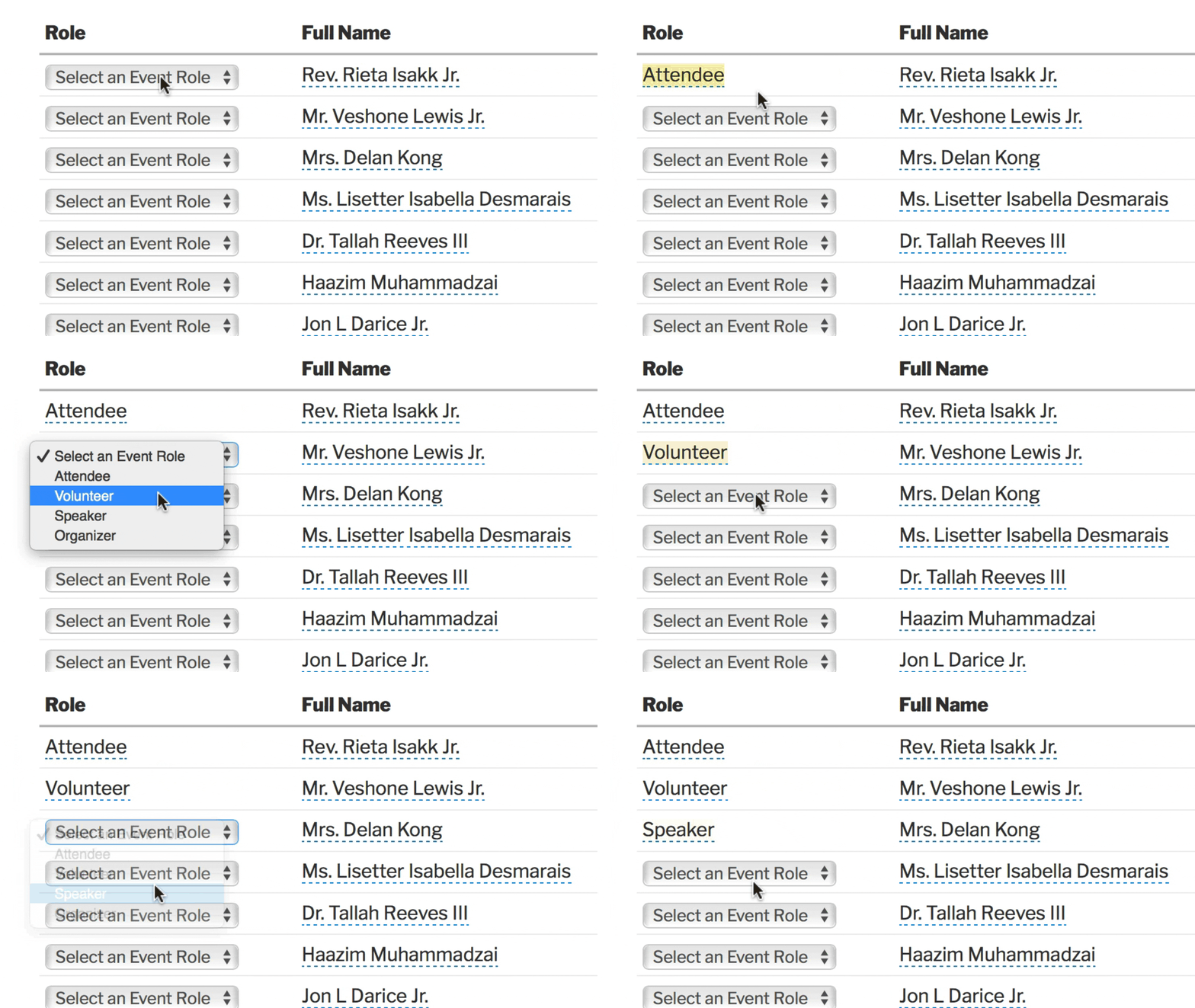
For every 570 entries you edit, you will save an hour!
We’ve run the numbers to make sure.
We knew Inline Edit was going to be a game-changer, but we didn’t know just how much time it would save. So we ran a test:
Update a single dropdown field for eight entries in three settings:
- GravityView using “Edit Entry”
- The Gravity Forms Entries screen, and
- Inline Edit
We recorded the findings, and found Inline Edit is 340% faster than other editing methods: Inline Edit 14.8 seconds = 1.85 seconds / entry GravityView 65.9 seconds = 8.24 seconds / entry Gravity Forms 65.3 seconds = 8.16 seconds / entry (We’ll update this post with the video, once it’s ready to share)
Why? Thank Saul, and others like him.
One of our most vocal GravityView advocates—let’s called him Saul—told me about his process:
I have a GravityView table layout where I review a few hundred entries a day. I update a drop-down field that has custom statuses, so that my administrator can include them in his timesheet reports.
Saul wasn’t contacting support because he was frustrated with the editing process; he had another question. But when I looked at his process and his website, I felt bad for him! It took so much work just to update a single field. We had planned to develop Inline Edit, but after seeing the process Saul used, it became a priority. There are a lot of jobs that need you to do repetitive tasks. As a programmer, I want to help make that easier. Every time I see opportunities to save our customers’ time, I want GravityView to help.
It was a long time coming. Finally!
Just 19 days after launching GravityView—August 12, 2014—I created a ticket titled “Inline Edit for each field”. I’ve wanted an easier way to update entries since almost day one, and I’m so glad that it’s here.

Inline Edit will help save thousands of frustrating hours (and maybe millions!). If you edit entries, I know this will save you lots of time, and I hope you love it.

Helpful tips right in your inbox.
Subscribe to get the latest articles, information on releases and helpful Gravity Forms tips!
More articles

Launch Log: theme template editing in Block MCP, Shield silentCAPTCHA for Zero Spam, and GravityView fixes
Block MCP adds safe theme template editing, Gravity Forms Zero Spam gains Shield silentCAPTCHA support, and GravityView fixes lightbox and notice bugs.

GravityKit turns 12: a year in review, and 30% off Lifetime All Access
GravityKit turns 12. A look back at a year of GravityView 3.0, GravitySearch, and AI-assisted building, plus a birthday sale on the Lifetime All Access Pass.

Launch Log: Row headers for screen readers, smarter conditional logic, and multi-View fixes
GravityView 3.1 adds row headers for screen readers, plus smarter conditional logic in GravityCalendar and fixes for DataTables, Maps, and Dynamic Lookup.