
Published
•
Updated
Announcing Maps 2.0: Radius search is here!
GravityView Maps 2.0 adds radius search, letting visitors find nearby listings by entering an address or using their current location. Great for store locators, directories, and event listings.

We’re excited to announce the release of Maps 2.0. This update sees the addition of the highly-anticipated Radius Search feature! This allows users to search for listing locations nearby, or type in an address to see listings in the surrounding area.
Radius search is a powerful new feature for building geolocation directories, store locators, event listings, travel apps, and more! Keep reading as we unpack the full release below.
Introducing geolocation radius search
To enable Radius Search on your map, you’ll need to add the new “Geolocation Radius” search input field to your Search Bar widget.
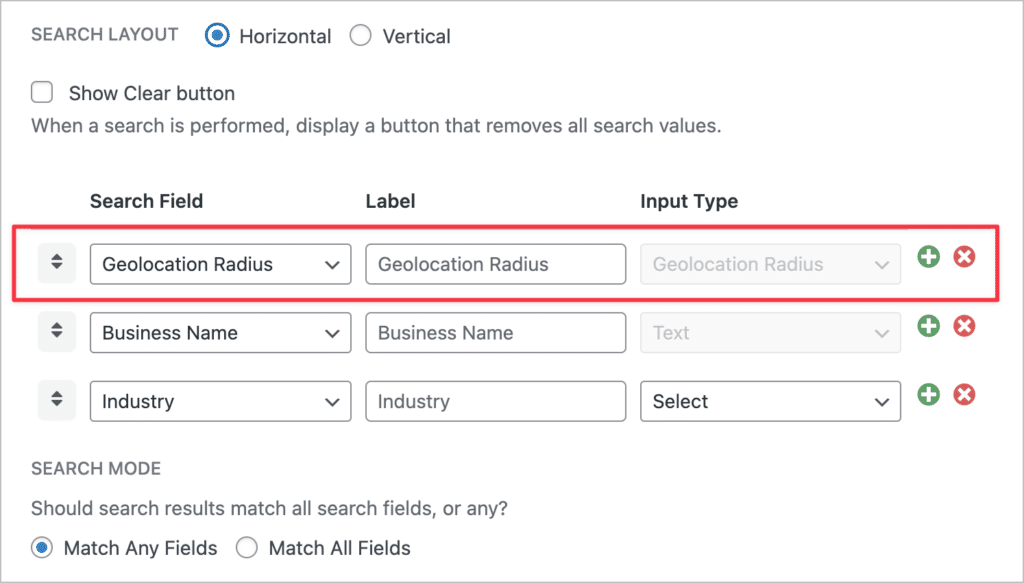
This new search field allows users to enter an address (or use their current location) to search for listings nearby. After entering a location, the map will then center on that location and display listings within a defined radius.
The default radius size (measured in either miles or kilometers) can be set in the Maps settings. Users also have the ability to adjust this from the front end when they perform a search.
When users begin typing in an address, their search will autocomplete to display several options for them to choose from. When a user performs a radius search, only locations within the map radius will display in the View!
Radius Search has been a highly requested feature, so we’re incredibly excited to release it for all of our Maps users!
Search on current location
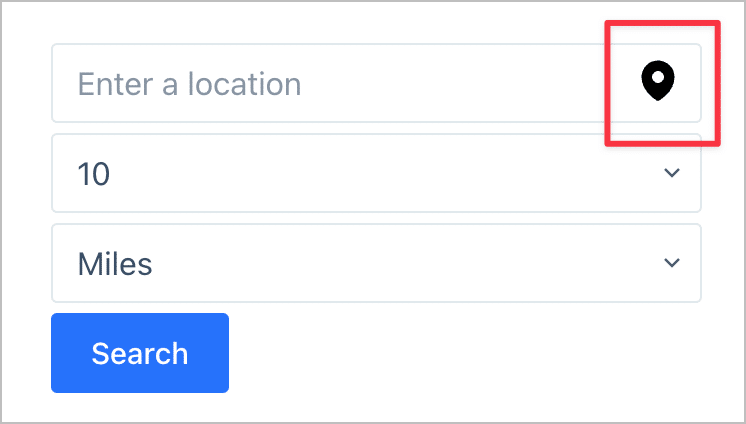
Users can also search on their current location by clicking on the map marker icon on the right of the location search input. After clicking the icon, the map will auto search and re-center on the user’s current location.
Search as map moves
Another powerful feature in Maps 2.0 is the ability to “search as map moves”. By enabling this option, the View entries below the map will refresh in real-time as you click and drag the map to different locations.
Here’s what this looks like on the front end.
This powerful feature brings our Maps extension on par with the experience you’ve come to expect on popular websites like Yelp, Zillow and AirBnB!
Address field autocomplete
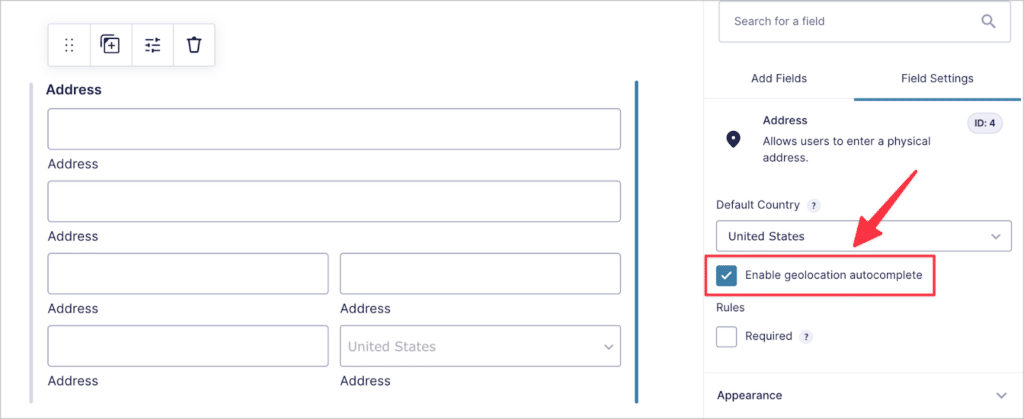
In Maps 2.0 we’ve also added autocomplete for the Gravity Forms “Address” field. You can enable this by checking the new “Enable geolocation autocomplete” checkbox in the field settings.
Here’s what autocomplete looks like on the front end:
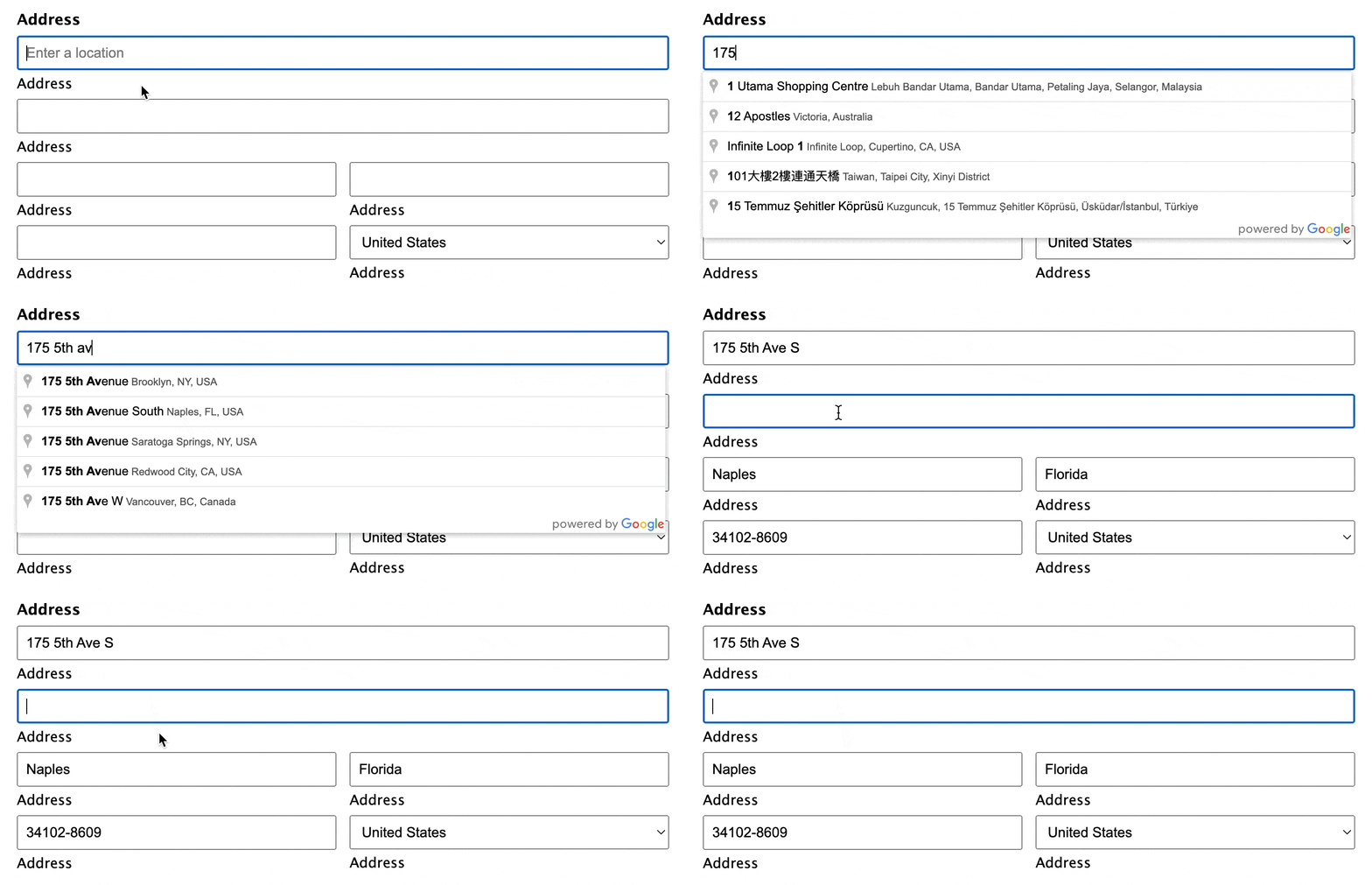
Address autocomplete saves users time and provides a much better user experience!
💡 Pro tip: This is the same functionality provided by the Gravity Forms Geolocation Add-On (included in the Elite license).
Faster maps
Last but not least, Maps 2.0 includes a raft of performance enhancements, meaning your maps will now load faster than ever. The faster load times should be especially prominent for maps with a large number of entries, or pages with many single-entry maps.
Upgrade your Maps extension today!
Radius search allows users to center the map on a specific area or address and display map listings within a defined radius. Radius search opens up new possibilities for building map-based applications using Gravity Forms and GravityView—easily create store locators, travel apps, event listings, Yelp clones, and more!
You can upgrade to Maps 2.0 from the “Products & Licenses” screen under “GravityKit” in your WordPress Admin area. To see the full Maps 2.0 release, check out the official changelog.

Get better at Gravity Forms, one email a week
New GravityKit releases, practical Gravity Forms tutorials, and subscriber-only discounts. One short email every week, unsubscribe anytime.
More articles

GravityMigrate 2.0: No-sweat WordPress form plugin migrations
Nobody wants to move forms between plugins. They want the site launched, the client onboarded, the referrals to stop falling through the cracks. GravityMigrate 2.0 makes moving forms effortless.

Launch Log: Two-way form migrations, a modernized chart block, and tighter board permissions
GravityMigrate 2.0.0 moves forms between Gravity Forms and seven other form plugins, GravityCharts modernizes its block in the WordPress editor, and GravityBoard tightens how board permissions are enforced.

9 ways to automate client work with the GravityKit MCP
Nine client jobs you can hand to the free GravityKit MCP, from auditing broken Views to cloning a finished build. Every one verified on a live site.