
Published
•
Updated
7 takeaways from Ahrefs Evolve 2026 for WordPress professionals
Seven takeaways from Ahrefs Evolve 2026 for WordPress builders, covering AI discoverability, customer-led content, the adoption gap, and where the real opportunity sits.

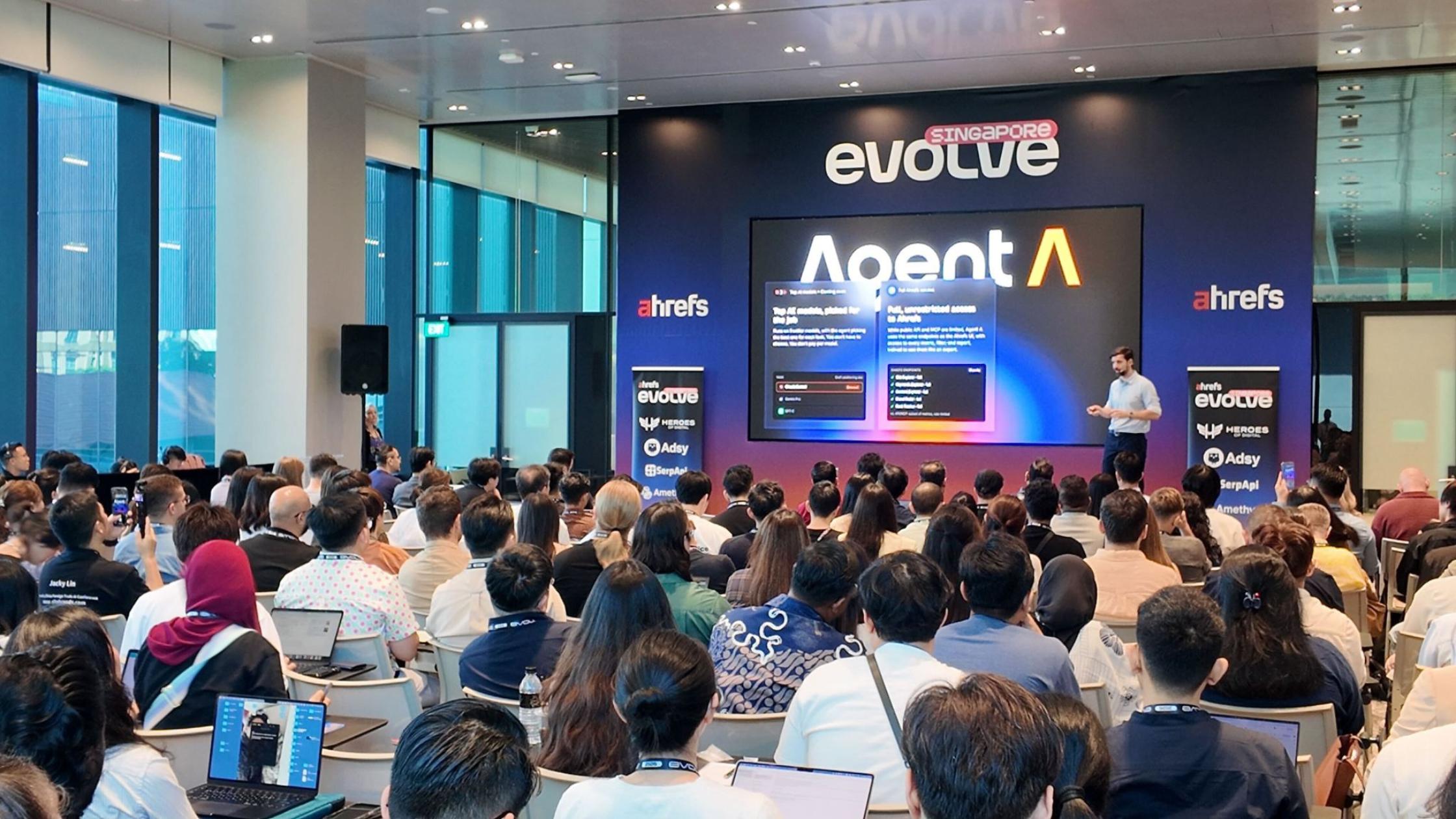
I recently spent two days at Ahrefs Evolve in Singapore, a conference that pulls in digital marketing professionals from around the world to talk AI, SEO, content, and brand building.
A week later, so many ideas are still stuck in my head. While much of the content was aimed at in-house marketing teams and agencies with dedicated SEO departments, I had a secret agenda. I wanted to know what would actually matter for the people building and running WordPress sites!
Here are the takeaways I think are most useful.
1. The AI adoption gap is the real opportunity
At one point during the conference, Tim Soulo (Ahrefs CMO) asked the room, “Who here has automated more than 50% of their work with AI?” Almost nobody raised their hand. He then asked, “Who has vibe coded an app with AI?” About 10% of people raised their hands.
Even professional marketers at the forefront of their industry aren’t using AI agents or automated pipelines. They’re using ChatGPT the same way they were two years ago, as a slightly smarter search engine. Alan Chan from Manus AI calls this the “imagination gap”. The technology to automate complex workflows exists right now, most people just haven’t explored it.
The gap between people using AI as a chatbot and people using it as a system is the biggest competitive advantage available to anyone right now, and it’s almost entirely about willingness to spend an afternoon experimenting and figuring things out.
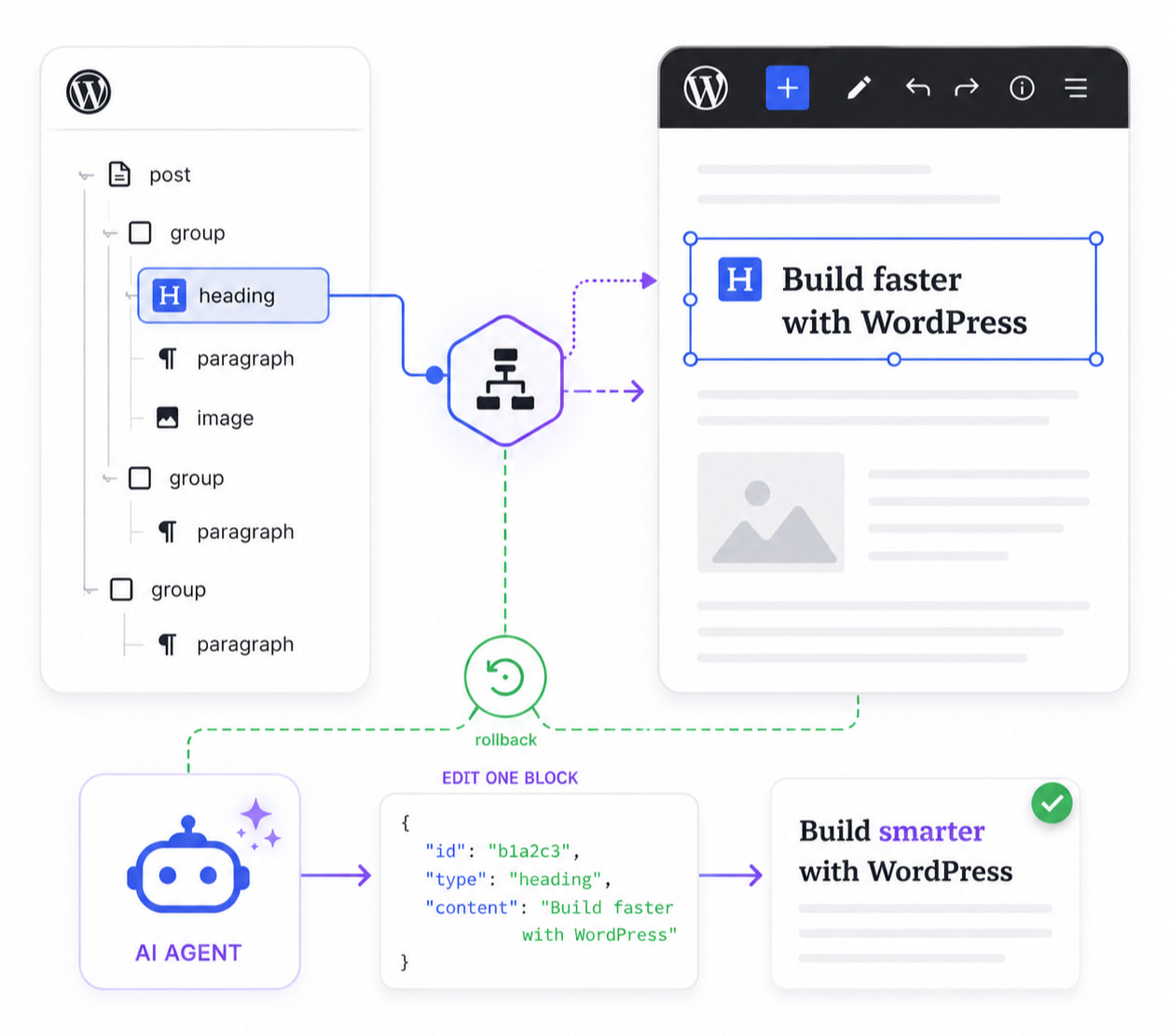
This is also what we’ve been building toward with Block MCP, our open-source bridge that lets AI agents edit WordPress pages block by block. It’s one small piece of the agent-driven future, but a useful one if you want to see what AI-as-a-system feels like on WordPress.
If you want to feel this firsthand: pick one repetitive task in your work, anything you do more than twice a month, and spend two hours figuring out how to automate it with AI. Start small. The compounding effect is real.
2. Underserved niches are still wide open
One of the many interesting conversations I had at the conference was with Dr Gireesh Likhyani, founder of Likhyani Group, a marketing agency focused entirely on healthcare. His insight: healthcare is genuinely underserved by website builders because the compliance barriers scare most people off. Less competition, more meaningful work for the teams willing to learn the rules.
This applies well beyond healthcare. Any niche with regulatory complexity (legal, finance, insurance, government, education) has the same dynamic. The complexity is exactly what keeps the space open, and it’s also where the big general-purpose AI tools are slowest to be useful, because the rules are too specific to bake into a generic product.
For people building on WordPress, these niches tend to play to the platform’s strengths. A dentist’s office doesn’t need a custom React app. They need a well-built WordPress site with proper forms, appointment booking, and content that answers the questions patients are asking AI before they ever search Google (see takeaway #4). The same is true for legal offices, small accountancy firms, local government services, and a long list of others.
Try this week: Pick one “complicated” niche you’ve avoided and spend an afternoon researching how web services actually work there. The compliance requirements are usually more manageable than they look from the outside, and the lower competition is real.
3. Your sites need to be discoverable by AI, not just Google
Tim Soulo (Ahrefs CMO) and Dan Petrovic (DEJAN) both presented data showing that AI systems like ChatGPT and Gemini are increasingly where people discover brands and products. But here’s the thing: the rules are different from traditional SEO.
Dan ran over a million queries against major LLMs and surfaced some striking patterns. Brands with single-token names (one word, no spaces) get recommended around 8x more often than multi-word brands. YouTube content is disproportionately cited because AI systems train on transcripts. And freshness matters more than authority, which flips the traditional SEO playbook on its head.
What this means in practice: spend an hour asking ChatGPT, Gemini, and Claude questions in your niche. Does your site come up? Does your product get mentioned? If not, you’ve just found a real problem worth solving.
There’s a builder-level angle to this too. The signals AI systems weigh are the ones that WordPress already does well: clean semantic HTML, structured data and schema markup, fast Core Web Vitals, well-structured page content, and clear author signals. None of this is new SEO work, but the relative weighting has shifted.
Here are three additional things you can do right now to improve discoverability in AI search:
- Update your brand profiles everywhere: Founder of Flow Agency, Viola Eva spoke of the importance of consistent messaging across online properties, because AI pulls from these to form its understanding of your brand! This includes your Google Business profiles, social profiles, directory listings, and plugin pages.
- Check how AI actually talks about you right now: Ask ChatGPT, Gemini, and Perplexity ‘what is [your brand]?’ and ‘recommend a [your category] tool.’ See what comes back. Dan Petrovic built authority.dejan.ai specifically for this. You can’t optimize what you haven’t measured.
- Refresh your website content: Tim Soulo’s data showed freshness beats authority for AI citations. Even updating an existing page with current info can help. AI models favor recent content, so a blog post published today carries more weight than a perfectly optimized page from 2023.
4. People are asking AI before they search on Google
Robert Lai, CEO of Kaliber, gave one of my favorite talks. His thesis: the traditional marketing funnel starts too late. People aren’t going straight to Google anymore. They’re asking AI first.
Think about the difference. Instead of searching “dentist near me,” someone asks ChatGPT “why do my gums bleed when I floss.” That’s a completely different type of query, and it happens before any search intent exists. By the time they search Google for a dentist, the AI has already shaped their thinking about what they need.
For anyone publishing content on WordPress, this changes what you should be writing. Keyword research alone isn’t enough. You need to find the questions people ask before they search: the confused, ambient, half-formed questions that don’t make it into a search box. Your support emails, your customer conversations, and your form submissions are full of them.
One question worth running this week: pull your last 10 support tickets, client conversations, or contact-form submissions. Feed them into Claude or ChatGPT, and ask, “What questions are people trying to answer before they even know they need our product?” The output is content you didn’t know you needed.
5. The AI content ouroboros: commodity content is dead
This was the idea I kept coming back to throughout the whole conference. If AI can research a topic and piece together the important information from the existing internet, why does a new AI-written article on that topic need to exist? Who reads it? Other AIs? It’s a circular loop: AI reads the web, AI writes new content, AI reads that content, repeat.
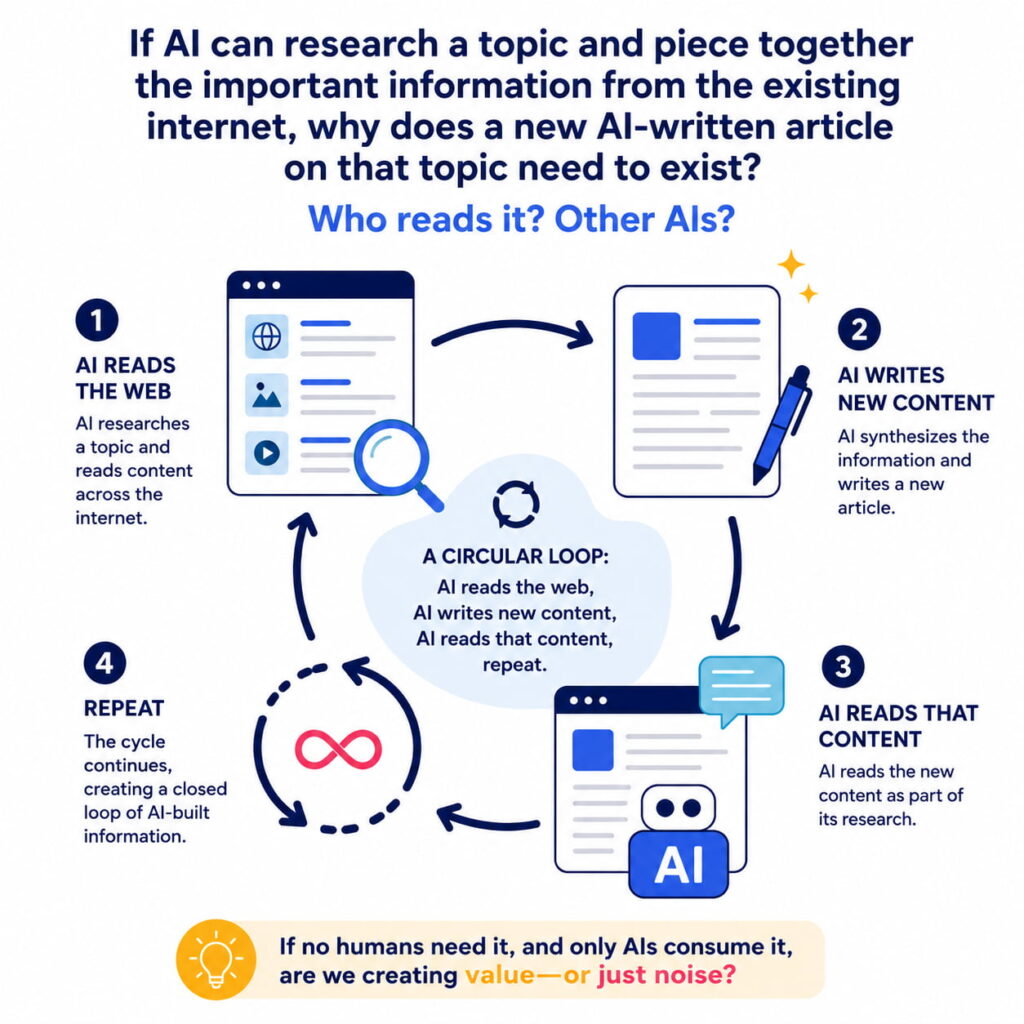
The only content that breaks this cycle is content with genuine original insight, first-hand experience, or a unique perspective that doesn’t already exist anywhere. This has real implications for everyone publishing on WordPress.
Who wins in this world? People with proprietary data and first-hand experience. The teams who write about their actual work, their real configurations, their honest opinions about tools they’ve used, what they’ve measured and what they’ve changed. Who loses? Anyone publishing generic “Top 10” articles or rewriting the same getting-started guides that already exist in a thousand places.
Before your next post: ask yourself, “Could an AI write this from existing sources?” If the answer is yes, either add something only you can add (your experience, your data, your opinion) or don’t publish it at all.
6. The “how I actually built this” tutorials add real value
Across multiple conversations at the conference, the type of content people kept saying is performing well in both traditional search and AI citations is hands-on, specific, first-hand tutorial content. Things like “how I integrated X with Y,” “how I configured Z for this exact problem.” The reason is straightforward: this type of content can’t be synthesized by AI from existing sources. It requires someone to actually do the thing and write about it.
This is good news for the WordPress world, because WordPress builders solve weird, specific, contextual problems every day. Every plugin combination you’ve gotten working, every form-to-CRM integration you’ve wired up, every conditional-logic recipe you’ve debugged, that’s all original content that no AI can reproduce without your experience.
The key is specificity. “How to use WordPress” is commodity content. “How I built a multi-step workflow that cut my client’s support tickets by 40%” is original, practical, and citable. Write about what you actually do. Screenshot your setups. Share your configurations.
Try this week: Think about the last build where you solved a tricky integration or configuration problem. Write it up with screenshots, even just for your own blog or company site. That’s the content that earns links and citations in 2026.
7. Original data beats everything
James Norquay from Prosperity Media presented on digital PR, and his message was clear: original data studies are the most useful content you can create. Not opinions. Not rewrites of existing information. Original data that nobody else has.
The sweet spot is the intersection of what your industry cares about and what you can credibly speak to. And you don’t need a research department. Public datasets like Common Crawl, HTTP Archive, and W3Techs are free. Your own data, anonymized and aggregated, is gold. Even a simple survey of 100 people in your niche gives you something nobody else has.
For anyone running a WordPress site, this is worth taking seriously. What patterns have you noticed across your sites? What’s the most common configuration mistake you keep seeing? What’s the average load time you achieve? What plugin combinations actually work together? Aggregate your experience into data points and you’ve got content that every blog in your niche will want to reference.
Where this leaves us
If there’s a single through-line across all seven takeaways, it’s this: getting ahead requires a willingness to actually use AI as a system rather than just a chatbot. The technology and the audience have both moved on. The question is whether the people building on WordPress will move with them.
That’s the shift I keep coming back to. AI doesn’t replace the work you do figuring out your customers, your message, and the specific problems only you can solve. But it does give you better leverage on the parts of the work AI is genuinely good at, and the people who close that gap first will be the ones who define the next few years of WordPress.
Get better at Gravity Forms, one email a week
New GravityKit releases, practical Gravity Forms tutorials, and subscriber-only discounts. One short email every week, unsubscribe anytime.
More articles
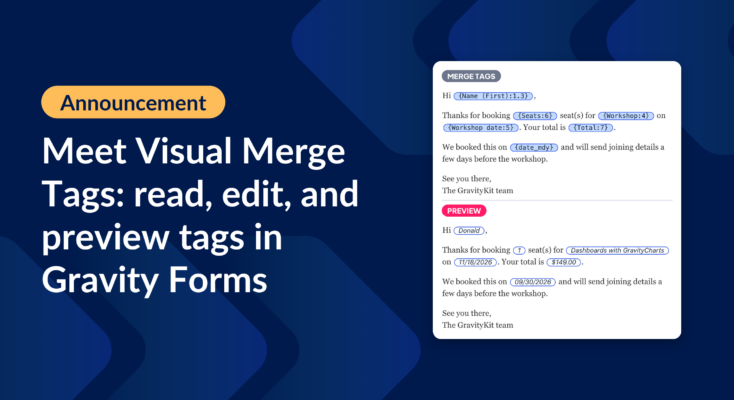
Announcing Visual Merge Tags: tags you can read, edit, and preview in Gravity Forms
Visual Merge Tags turns Gravity Forms merge tags into chips you can read, change from a settings panel, and preview with real entries before you save.
Launch Log: Visual Merge Tags, Elementor widget style settings, and security updates
Visual Merge Tags arrives with Foundation 1.35.0, GravityView and Magic Links get security fixes, and the Elementor widget gains the form block’s style settings.
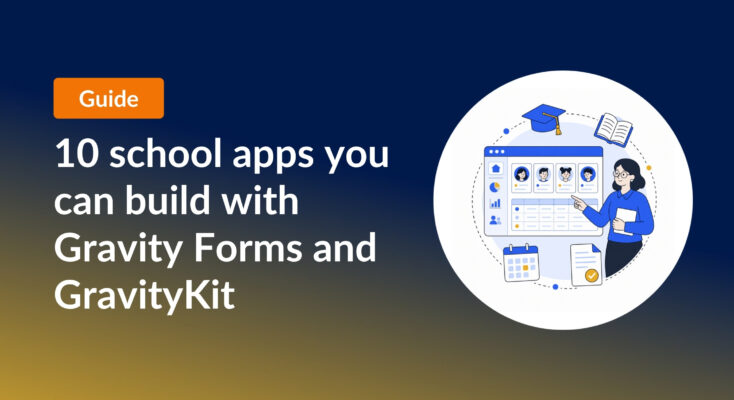
10 school apps you can build with Gravity Forms and GravityKit
Ten apps schools and universities build on Gravity Forms without custom code: application review, enrollment, student portals, report cards, libraries, calendars, and more. Walkthroughs for each.