
Published
•
Updated
Feature Highlight: Searching entries in a View
Add a configurable Search Bar to any GravityView View and let visitors filter entries by text, dropdown, date range, and more. Setup takes just a few clicks.


In this post, we’ll explore GravityView’s Search Bar widget—one of the most powerful tools for helping visitors find what they’re looking for in your Views.
Whether you’re building a member directory, a business listing, or a searchable database, the Search Bar lets visitors filter entries using text fields, dropdowns, date ranges, and more. Here’s what you can do with it.
Wanna try it?
Spin up a demo
See what you can build with GravityView — explore the live demo.
Adding a search bar to your View
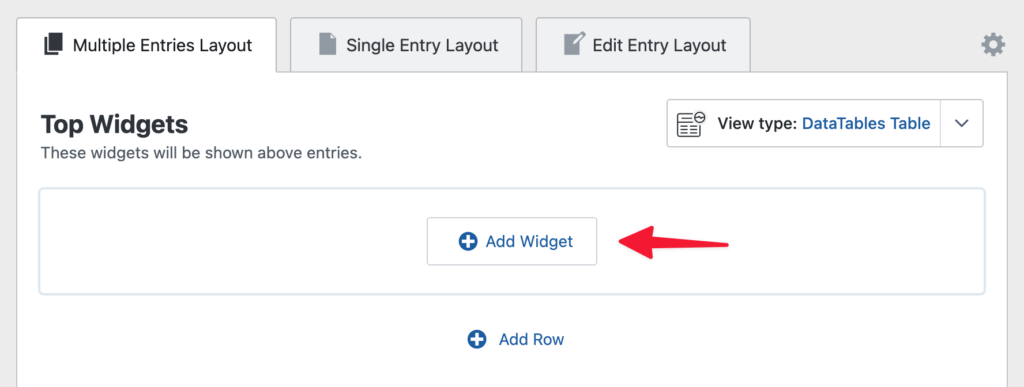
To add a Search Bar, open your View in the editor and click Add Widget in one of the widget areas (above or below your View fields). Select Search Bar, then click the gear icon to configure it.
The Search Bar is built using rows and columns. Click Add Row to create a new row, then Add Search Field to place fields inside it. Each row supports up to 4 columns, and you can drag and drop to reorder fields and rows however you like.
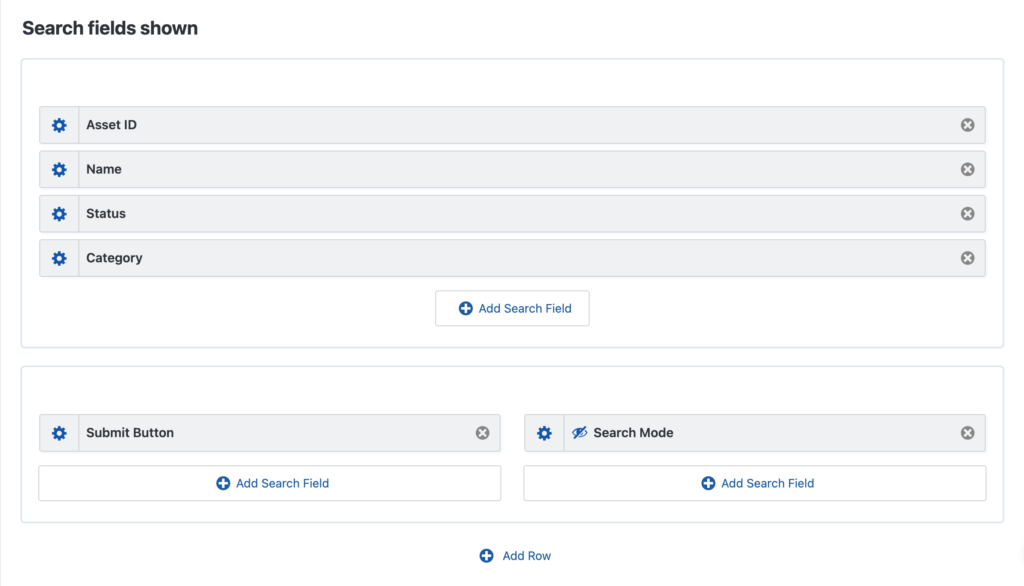
You can also control how fields are arranged within each column—either horizontally (side by side) or vertically (stacked).
Choosing which fields to search
By default, the Search Bar includes a single “Search Everything” field that searches across all entry data. But you can replace this with individual fields for more targeted filtering.
Click Add Search Field and choose from:
- Any Gravity Forms field on your form (text fields, dropdowns, checkboxes, etc.)
- Entry metadata like Entry Date, Entry ID, Entry Creator, Is Starred, or Is Read
- Approval Status (if you’re using GravityView’s powerful entry approval feature)
Each field you add becomes a separate filter that visitors can use to narrow down results.
Input types
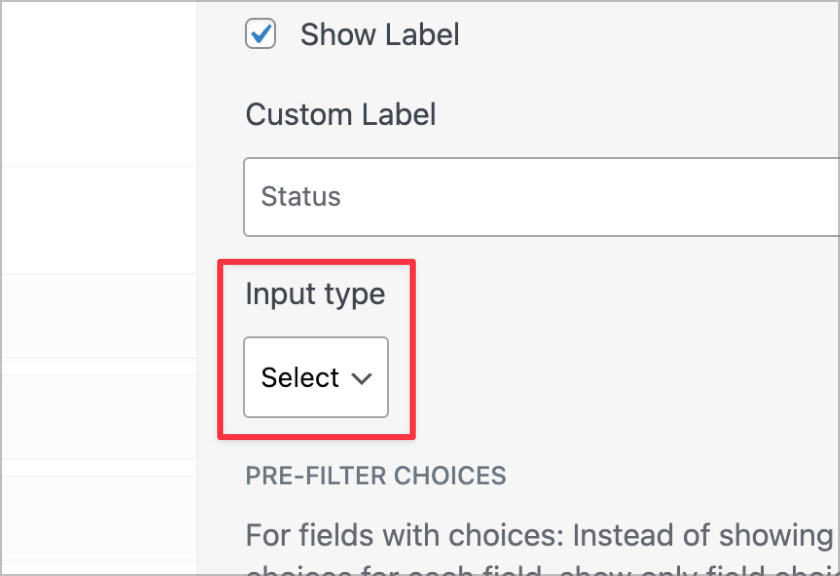
Each search field supports different input types depending on the field type. For example, a dropdown field might display as a Select, Radio, Checkbox, Multiselect, or Links input in the search bar.
For Date fields (including Entry Date), the input type is a date range picker, letting visitors filter entries between two dates. This is perfect for event listings, logs, or any time-based data.
For Number, Product, Quantity, and Total fields, you can use a number range input, allowing visitors to set a minimum and maximum value.
You can also customize the label for each search field, so it doesn’t have to match the original form field name.
Search modes: Match any vs. match all
The search bar include a default Search Mode field. This controls how multiple filters work together:
- Match Any Fields — Entries appear if at least one field matches the search. This casts a wider net and shows more results.
- Match All Fields — Entries only appear if every field matches. This is useful when visitors need precise results, like finding Mexican restaurants specifically in New York City.
Search Mode can either be hidden (default) or made visible so users have the ability to adjust it when performing a search.
Search modifiers
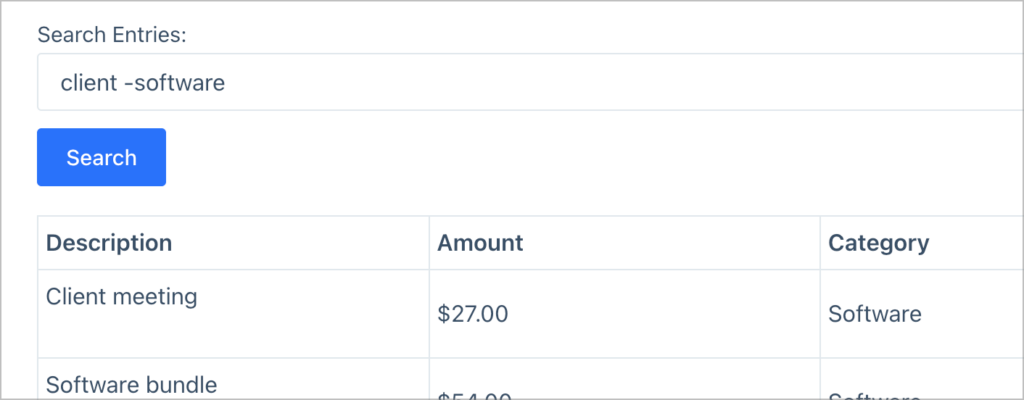
GravityView’s “Search Everything” field supports search modifiers that give visitors more control over their results:
+keyword— The entry must contain this term. For example,+trainingensures only entries with “training” are shown.-keyword— The entry must not contain this term. For example,-completedexcludes any entry containing “completed”."exact phrase"— Searches for an exact sequence of words. For example,"online course"only matches entries with that exact phrase, not entries that happen to contain “online” and “course” separately.
These modifiers work with the “Search Everything” field and can be combined for more targeted searches.
Advanced search
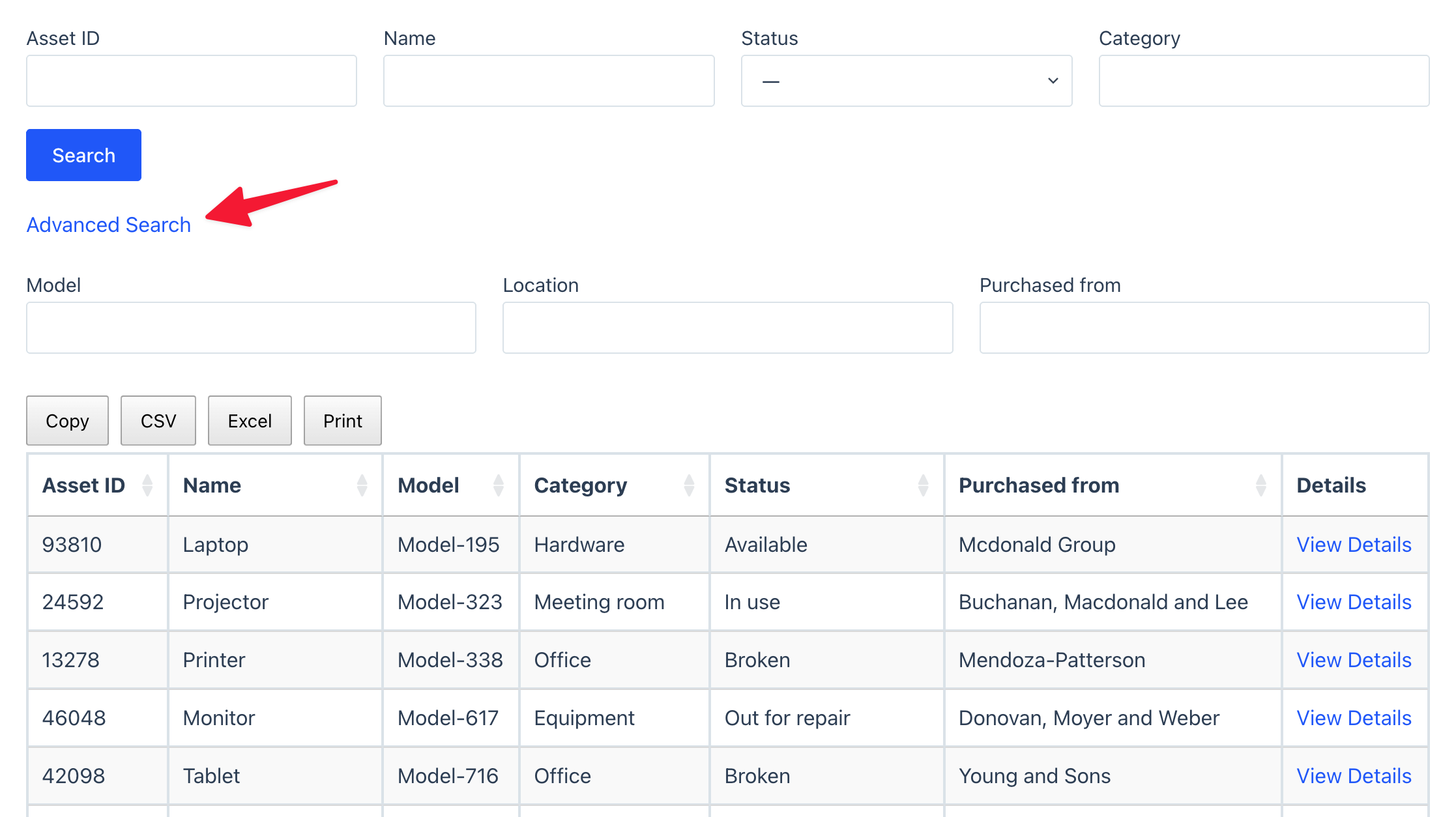
The Search Bar has a built-in Advanced Search section where you can place additional search fields that are hidden by default. Visitors can expand this section by clicking an “Advanced Search” link when they need more precise filtering options.
This is ideal for Views with lots of filterable data, as you can keep the main search bar clean and simple while still offering power users access to additional filters.
Hiding entries until a search is performed
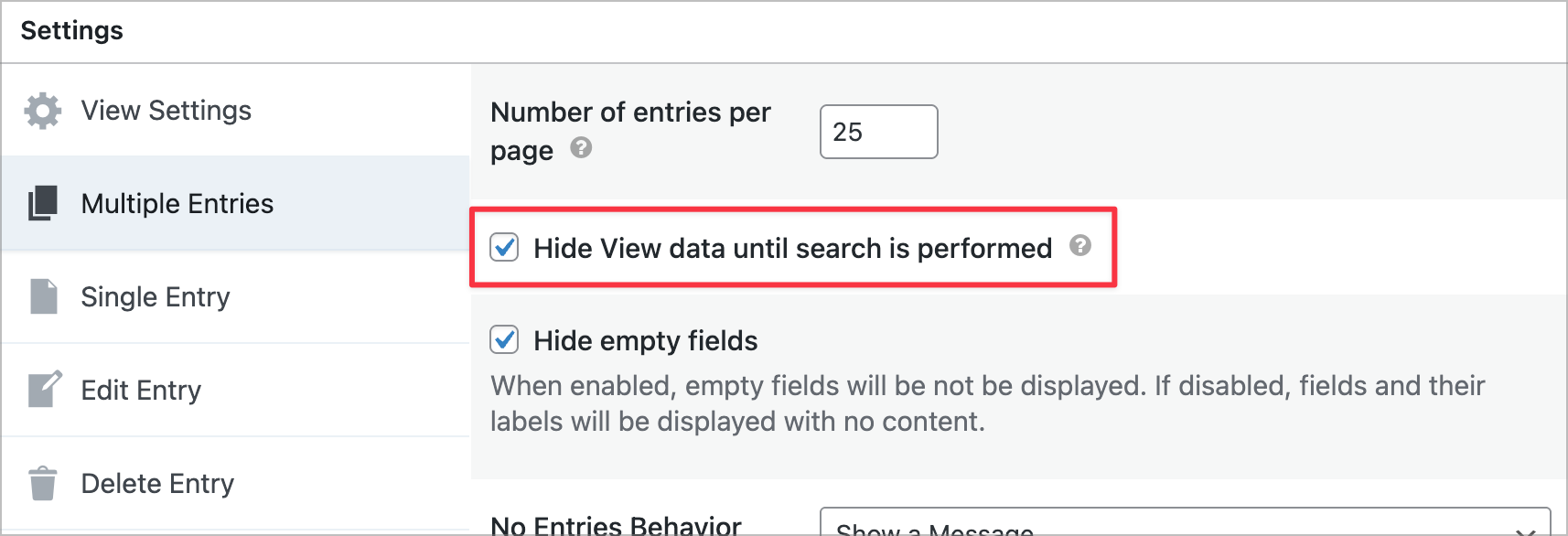
If your View contains hundreds or thousands of entries, you probably don’t want to display them all at once. Enable the Hide View data until search is performed setting in your View Settings, and the View will show only the Search Bar until a visitor submits a search. This is especially useful for large directories where browsing isn’t practical.
Linking to search results
After performing a search, the URL in your browser updates to reflect the current filters. You can copy this URL and use it anywhere—in a link, a menu item, or on another page—to send visitors directly to a pre-filtered set of results. Read more about linking to a search.
Only show choices that exist
For dropdown, radio, and checkbox search fields, you can enable a setting that limits the available options to values that actually exist in your current entries. This prevents visitors from selecting a filter option that would return zero results.
Learn More
For a full walkthrough of the Search Bar’s settings, see Configuring the Search Bar Widget in our documentation.

Helpful tips right in your inbox.
Subscribe to get the latest articles, information on releases and helpful Gravity Forms tips!
More articles
10 things you can ask AI to do with Gravity Forms (using the free GravityKit MCP)
See 10 practical things you can ask AI to do with Gravity Forms using the free GravityKit MCP: create forms, manage entries, build Views, and more.

Launch Log: theme template editing in Block MCP, Shield silentCAPTCHA for Zero Spam, and GravityView fixes
Block MCP adds safe theme template editing, Gravity Forms Zero Spam gains Shield silentCAPTCHA support, and GravityView fixes lightbox and notice bugs.

GravityKit turns 12: a year in review, and 30% off Lifetime All Access
GravityKit turns 12. A look back at a year of GravityView 3.0, GravitySearch, and AI-assisted building, plus a birthday sale on the Lifetime All Access Pass.