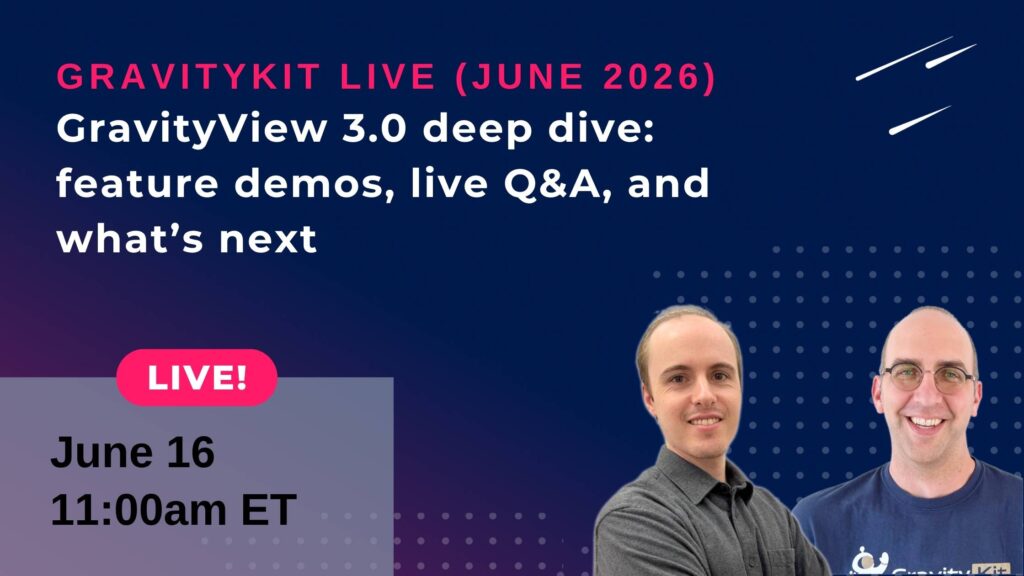
After a bit of a break, GravityKit Live! is back. We're kicking things off with a full GravityView 3.0 deep dive on June 16 at 11am ET, including feature demos, live Q&A, and a look at what's next. In other news, Casey dug into the data to pull up-to-date numbers on where WordPress actually sits among the top CMSes in 2026. Short version: it's still the biggest by a clear margin, but market share has slipped this past year. Full breakdown below.
In this edition:
🌟 Product spotlight: Photorealistic 3D maps for GravityView
🎙️ GravityKit Live: Join us for a walkthrough of GravityView 3.0!
🤖 The prompt: Model labs making moves
✍️ From the blog: WordPress powers 33% of the web (we pulled the data)
🧰 Updates to the ’Kit
🌟 PRODUCT SPOTLIGHT
GravityView – Maps Layout
Display entries on an interactive Google Map with geolocation functionality.
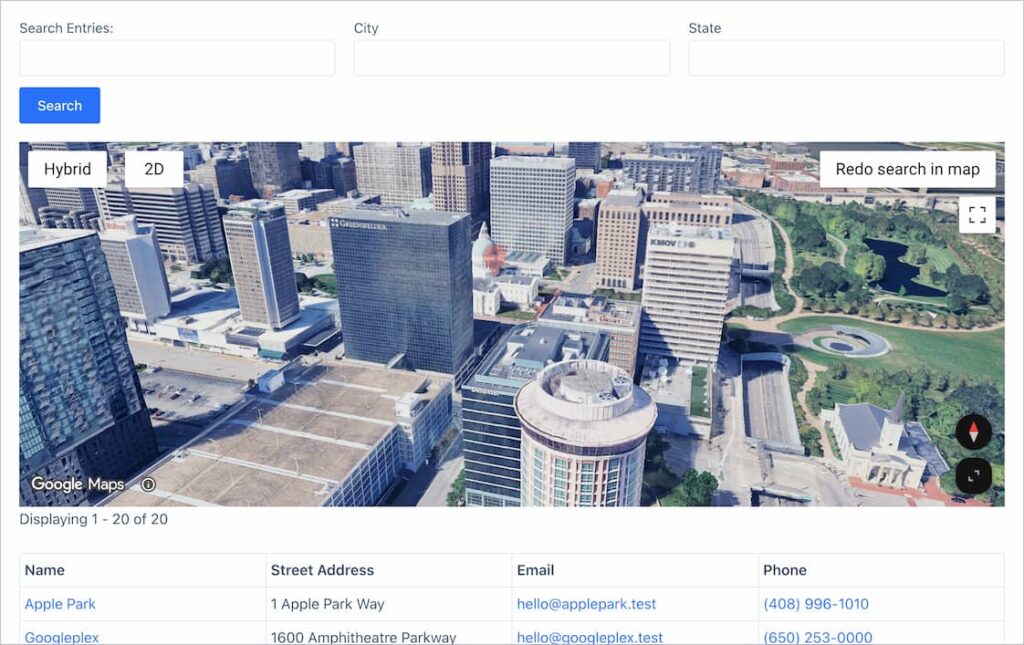
This update to the GravityView Maps Layout adds two new map types, “3D Satellite” and “3D Hybrid”, that render Google’s photorealistic 3D Maps, with a control to switch between 2D and 3D views.
In the GravityView Maps settings, first enable the new map types by checking the box that says "Enable 3D map types." After that, you will see the two new map types as options in the Map Type dropdown field.
An interactive map is also available on the Edit Entry screen and in the Gravity Forms entry view for setting an entry’s exact location.
These updates are part of our latest round of releases, which also includes updates to GravityView, GravityCharts, GravityCalendar, and other add-ons.
Join us for the next episode of GravityKit Live! We’re walking through every powerful new feature coming in GravityView 3.0, a major update and the foundation for a lot more to come. Tune in to ask questions live, catch up on the latest Gravity Forms ecosystem news, and see why GravityView 3.0 is such a big step forward.
Can't attend live? No worries. Register anyway and we'll send you the replay afterward.
Two of the biggest model labs both shipped updates that quietly redefine what "agent" actually means in practice.
Anthropic released Claude Opus 4.8 this past week, and the headline feature is something they're calling dynamic workflows. Inside Claude Code, Claude can now plan a task, run hundreds of parallel sub-agents in a single session, and verify its own outputs before reporting back to you.
Here's how Anthropic recommends using dynamic workflows:
Reach for a workflow when a task needs more agents than one conversation can coordinate, or when you want the orchestration codified as a script you can read and rerun. Examples include a codebase-wide bug sweep, a 500-file migration, a research question that needs sources cross-checked against each other, and a hard plan worth drafting from several independent angles before you commit to one.
A week and a half earlier, xAI shipped Grok Build. It's a terminal-native CLI built around the same shape: plan, review, approve, with parallel sub-agents and MCP server support. Install is a single curl command, and access is open to SuperGrok and X Premium Plus subscribers. The underlying model is also live in the xAI API and on OpenRouter for anyone who'd rather build their own harness.
We set out to update the answer to an age-old question: how much of the web actually runs on WordPress? Casey ran the numbers against the latest HTTP Archive crawl, picking up where Joost de Valk's foundational research left off. The full report covers CMS market share trends over time, a table of the fastest-growing CMSes (a few you probably haven't heard of), and our full methodology.
🧰 UPDATES TO THE ’KIT
Here are the plugins that got updates since our last newsletter: